
Discover how effective transporter selection helps businesses reduce freight costs, improve delivery reliability, evaluate performance and strengthen supply chain efficiency.
Choosing the right transporter is one of the most important decisions in transportation management. A transporter directly influences freight expenditure, delivery timelines, vehicle availability, shipment safety and overall supply chain performance.
However, many businesses still approach transporter selection primarily as a price comparison exercise. While competitive freight rates matter, selecting a logistics partner based only on the lowest quotation can create operational challenges that eventually cost more than the initial savings.
Effective transporter selection requires businesses to evaluate cost, reliability, capacity, route coverage, service quality and performance together.
A transporter offering a lower rate may not necessarily deliver the lowest total transportation cost if frequent delays, damages, billing discrepancies or vehicle shortages affect operations.
This article explores seven practical ways to improve transporter selection, strengthen transporter management and make more informed transportation decisions.
What Is Transporter Selection?
Transporter selection is the process of identifying, evaluating and appointing logistics service providers based on business requirements, transportation costs, operational capabilities and service performance.
The objective is to select transporters who can consistently meet delivery requirements while maintaining cost efficiency and operational reliability.
An effective transporter selection process considers:
- Freight rates and pricing structures
- Vehicle availability and capacity
- Geographic coverage
- Delivery performance
- Shipment safety
- Service-level compliance
- Billing accuracy
- Operational flexibility
- Historical performance
- Ability to support changing business volumes
A structured approach helps businesses move beyond informal decisions and establish a more transparent, measurable transporter selection process.
Why Choosing the Right Transporter Matters
Transporters play a critical role in connecting suppliers, warehouses, manufacturing facilities, distributors and customers.
An unsuitable transportation partner can affect multiple areas of business operations.
Increased Transportation Costs
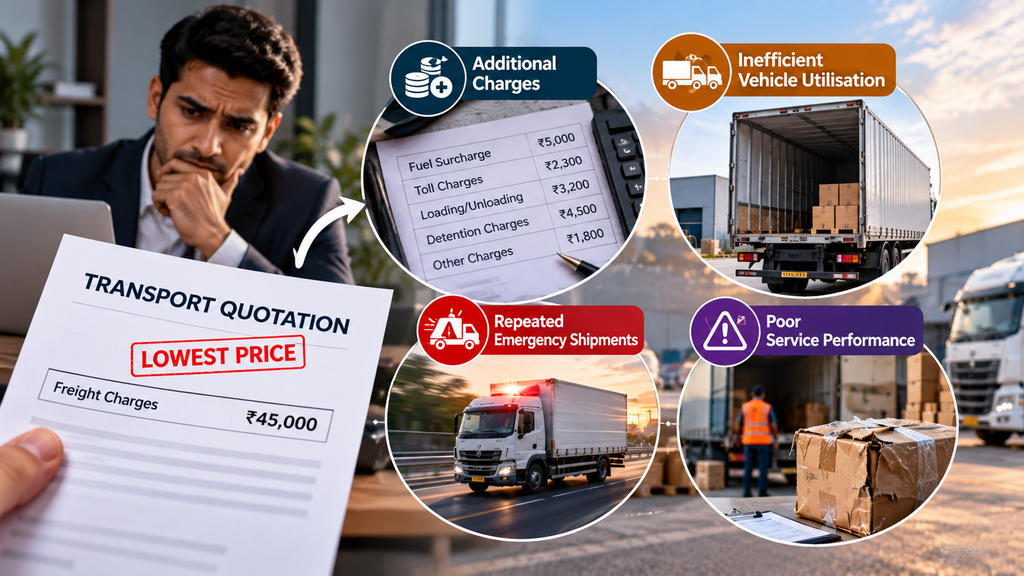
A low initial quotation may be offset by additional charges, inefficient vehicle utilisation, repeated emergency shipments or poor service performance.
Delivery Delays
Unreliable transportation can disrupt production schedules, inventory availability and customer commitments.
Vehicle Availability Issues
Transporters who cannot provide vehicles when required may create shipment backlogs and force businesses to arrange expensive alternatives.
Shipment Damages and Shortages
Poor handling, inadequate controls and inconsistent service quality can result in product losses and additional operational costs.
Limited Operational Flexibility
Businesses experience fluctuations in demand. Transporters who cannot adapt to changing volumes, routes or delivery priorities may restrict operational efficiency.
These challenges demonstrate why transporter selection should be treated as a strategic transportation decision rather than a routine purchasing activity.
7 Key Factors for Effective Transporter Selection
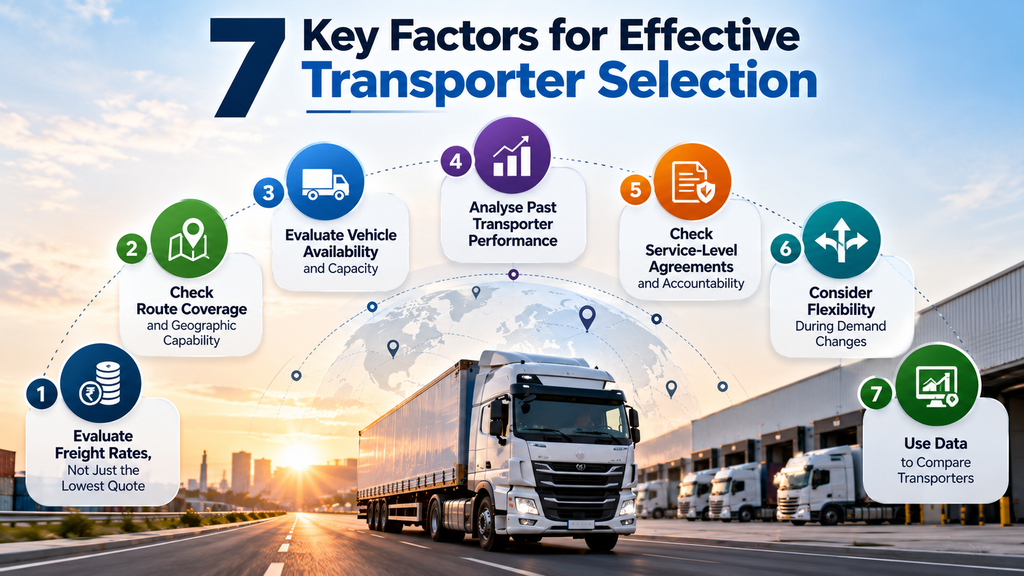
1. Evaluate Freight Rates, Not Just the Lowest Quote
Freight pricing is an important part of transporter selection, but the lowest quotation does not always represent the most economical option.
Businesses should evaluate the complete cost structure before appointing a transporter.
Consider:
- Base freight rates
- Additional transportation charges
- Fuel surcharges
- Detention charges
- Loading and unloading costs
- Minimum billing conditions
- Rate validity periods
- Contractual terms
Comparing transporters using consistent pricing parameters helps businesses identify the actual cost of transportation.
A transparent comparison also reduces the risk of selecting a transporter whose initial quotation appears competitive but results in higher expenditure over time.
2.Check Route Coverage and Geographic Capability
A transporter may offer competitive pricing but lack adequate coverage across the routes required by the business.
Route capability should therefore be a key consideration during transporter selection.
Businesses should examine:
- Serviceable locations
- Route familiarity
- Availability of vehicles across regions
- Delivery frequency
- Transit times
- Return-load opportunities
- Network strength
- Ability to support multiple destinations
For businesses operating across several states or distribution centres, geographic coverage can significantly influence transportation efficiency.
Selecting transporters based on route-specific capabilities can help improve service reliability and reduce unnecessary transportation complications.
3. Evaluate Vehicle Availability and Capacity
Vehicle availability directly affects a business’s ability to meet shipment schedules.
A transporter may have suitable pricing and route coverage but still struggle to provide the required vehicle type at the right time.
Businesses should assess:
- Fleet availability
- Vehicle types
- Load capacity
- Vehicle condition
- Availability during peak periods
- Full Truckload and Part Truckload capabilities
- Flexibility to accommodate urgent requirements
The right vehicle should match the shipment’s weight, volume, delivery requirements and transportation route.
Effective transporter selection considers whether a logistics partner can consistently provide the right capacity rather than simply promising availability.
4. Analyse Past Transporter Performance
Historical performance provides valuable insight into a transporter’s ability to meet operational expectations.
Businesses should establish measurable performance indicators instead of relying entirely on personal experience or informal feedback.
Important performance metrics include:
- On-time delivery percentage
- Vehicle placement compliance
- Shipment damage frequency
- Shortage incidents
- Transit-time consistency
- Customer complaints
- Billing accuracy
- Response time
- Service-level compliance
Regular performance reviews help businesses identify reliable transporters, recognise recurring issues and make informed decisions about future allocations.
Performance-based transporter selection also encourages accountability and continuous improvement.
5. Check Service-Level Agreements and Accountability
A clear Service Level Agreement (SLA) establishes expectations between a business and its transportation partner.
Without defined performance standards, it becomes difficult to evaluate service quality or address recurring failures.
An effective SLA may cover:
- Vehicle placement timelines
- Delivery commitments
- Shipment tracking
- Reporting requirements
- Damage and shortage procedures
- Escalation mechanisms
- Billing conditions
- Performance reviews
- Penalties or corrective actions, where contractually agreed
Businesses should ensure that service expectations are communicated clearly before appointing transporters.
A structured accountability framework helps create consistency across transportation operations and supports better transporter management.
6.Consider Flexibility During Demand Changes
Transportation requirements rarely remain constant throughout the year.
Seasonal demand, production changes, new distribution locations and urgent customer orders can affect vehicle requirements and shipment volumes.
Transporter selection should therefore consider operational flexibility.
Businesses can evaluate whether transporters can:
- Accommodate changing shipment volumes
- Support additional routes
- Provide vehicles during peak periods
- Handle urgent deliveries
- Adjust to changing delivery schedules
- Coordinate with multiple warehouses
- Respond quickly to operational disruptions
A flexible transportation partner can help businesses manage fluctuations without unnecessarily increasing operational complexity.
7. Use Data to Compare Transporters
Data-driven transporter selection reduces dependence on assumptions and inconsistent evaluation methods.
Businesses can develop a transporter scorecard that compares service providers against standard criteria.
A transporter evaluation framework may include:
| Evaluation Parameter | What to Measure |
| Freight Cost | Rate competitiveness and additional charges |
| Delivery Performance | On-time delivery and transit consistency |
| Vehicle Availability | Placement reliability and capacity |
| Shipment Safety | Damage and shortage frequency |
| Route Coverage | Geographic reach and serviceability |
| Billing Accuracy | Invoice discrepancies and rate compliance |
| Responsiveness | Communication and issue resolution |
| SLA Compliance | Adherence to agreed service standards |
A consistent evaluation framework helps businesses compare transporters objectively and identify areas requiring improvement.
The purpose is not simply to rank transporters by price. It is to understand which transportation partners meet the organisation’s operational and commercial requirements.
How to Evaluate Transporter Performance
Transporter selection should not end once a contract is signed.
Continuous performance monitoring is essential to ensure that appointed transporters continue meeting business expectations.
Businesses can establish periodic reviews using operational data and performance indicators.
A structured transporter performance review should examine:
Cost Performance: Are agreed freight rates being followed? Are additional charges justified and documented?
Delivery Performance: Are shipments reaching their destinations within committed timelines?
Vehicle Placement: Are vehicles being provided according to agreed schedules?
Shipment Quality: Are damages, shortages and handling issues being reported and addressed?
Service Reliability: Does the transporter respond effectively to operational changes and unexpected situations?
Billing Accuracy: Are invoices consistent with contractual terms and actual transportation movements?
Regular reviews help businesses identify performance gaps early and take corrective action where necessary.
The Role of Transporter Management in Transportation Cost Optimisation
Transporter management and transportation cost optimisation are closely connected.
Even a well-designed transporter selection process can lose its effectiveness without continuous monitoring and performance evaluation.
A structured transporter management approach can help businesses:
- Improve freight cost visibility
- Monitor service-level compliance
- Identify recurring delivery delays
- Reduce avoidable transportation expenses
- Improve vehicle utilisation
- Strengthen transporter accountability
- Evaluate alternative transportation partners
- Support better route allocation decisions
When transporter performance is measured consistently, businesses can make more informed decisions about transportation planning and resource allocation.
Common Transporter Selection Mistakes
Businesses may face avoidable transportation challenges when transporter selection is not supported by a clear evaluation process.
Common mistakes include:
- Selecting transporters exclusively on the basis of freight rates
- Ignoring historical delivery performance
- Failing to verify vehicle availability
- Overlooking route-specific capabilities
- Not establishing measurable service standards
- Relying on informal feedback instead of operational data
- Failing to review transporter performance after appointment
- Not maintaining alternative transportation options
- Ignoring recurring billing discrepancies
Avoiding these mistakes can help businesses establish a more reliable and transparent transportation network.
How Audex Can Help With Transporter Selection
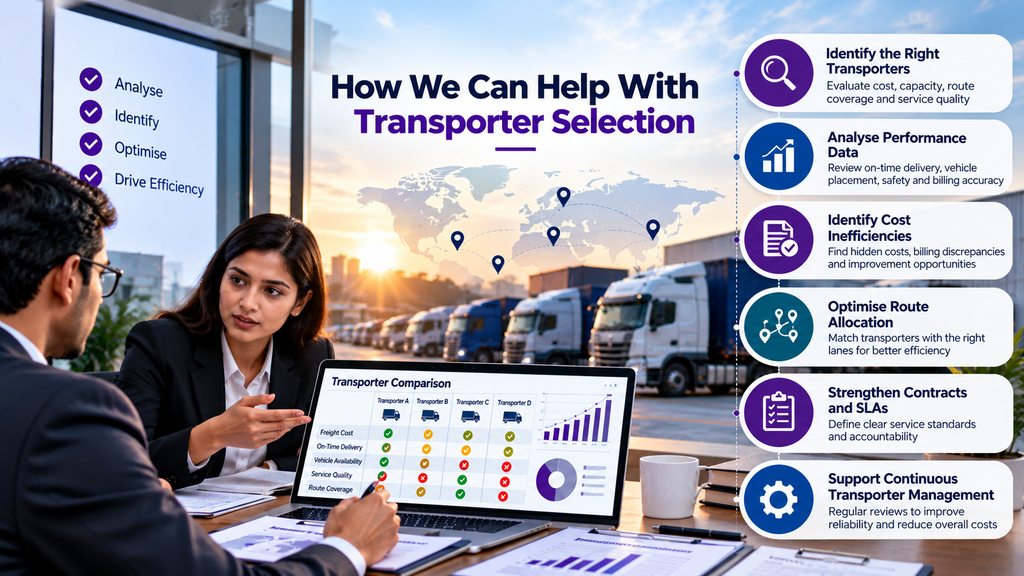
Effective transporter selection requires a clear understanding of transportation costs, operational requirements and service performance.
Audex helps businesses evaluate logistics and transportation operations by examining areas such as freight expenditure, transporter performance, vehicle utilisation, transportation planning and operational efficiency.
A structured transportation audit can help identify:
- Opportunities to improve transporter selection
- Gaps in transporter performance monitoring
- Freight cost inefficiencies
- Vehicle utilisation challenges
- Route allocation issues
- Billing discrepancies
- Opportunities to strengthen transportation management
By examining transportation operations beyond individual freight quotations, businesses can gain better visibility into the factors influencing their overall transportation expenditure.
The objective is to support informed decisions that balance cost efficiency, service reliability and operational requirements.
Conclusion
Transporter selection is more than choosing a logistics partner offering the lowest freight rate.
It requires a comprehensive evaluation of pricing, route coverage, vehicle capacity, delivery reliability, service standards and historical performance.
By establishing clear evaluation criteria, monitoring transporter KPIs, reviewing contractual compliance and using operational data, businesses can build a more structured approach to transportation management.
The right transporter is not simply the one who quotes the lowest rate. It is the one who consistently meets business requirements while supporting cost efficiency and reliable operations.
Choose Transporters Based on Performance, Not Just Price.
Understanding your transportation network is the first step towards better transporter selection and improved logistics efficiency.
Explore Audex transportation and supply chain audit solutions to identify opportunities for stronger transporter management and cost optimisation.
Leave a Reply