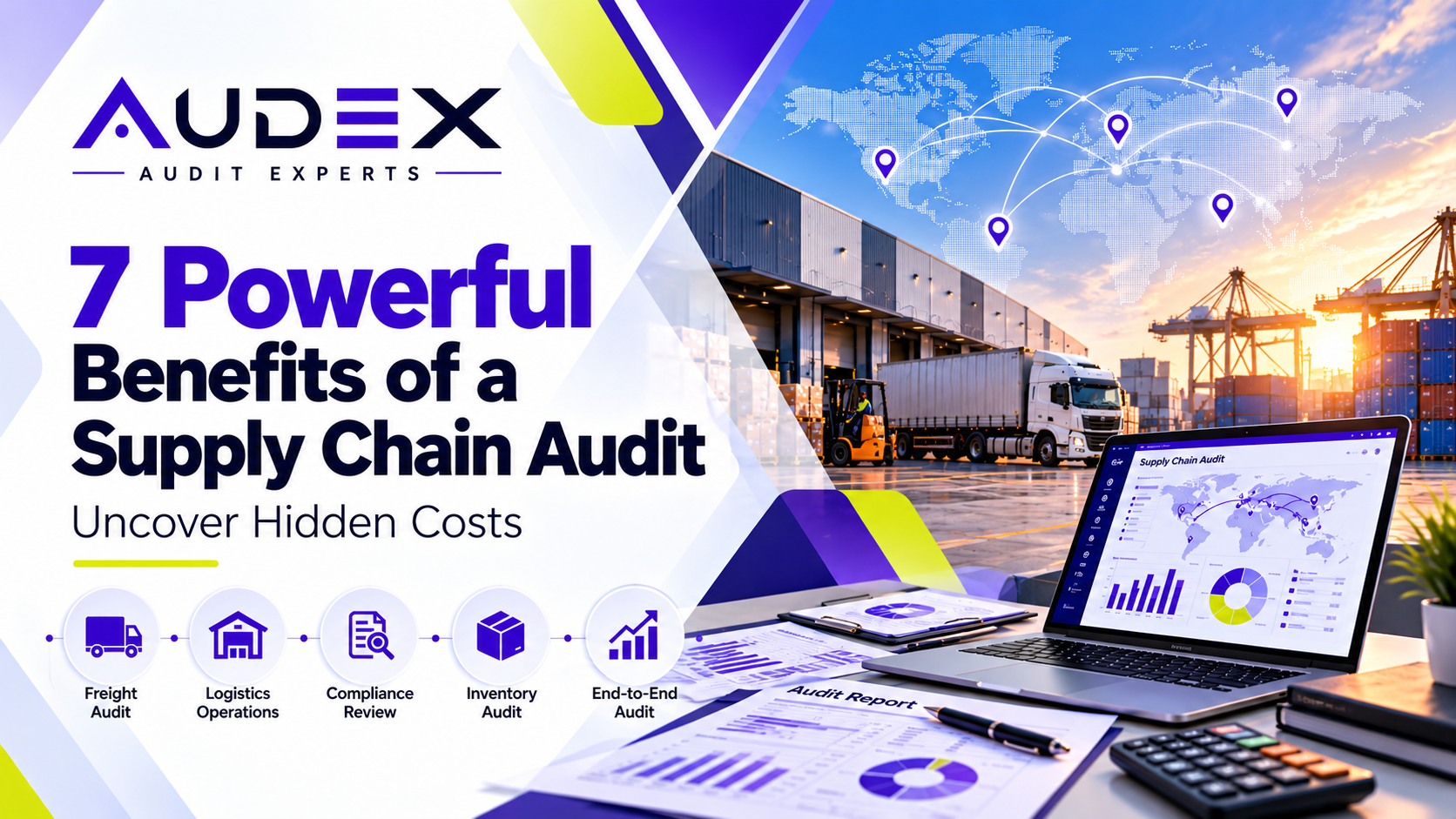
Learn what a supply chain audit covers, how it identifies hidden costs, and how Audex helps businesses improve cost control, compliance and efficiency.
Discover how a supply chain audit helps businesses identify hidden costs, uncover operational gaps, strengthen compliance and improve supply chain efficiency.
Introduction
A supply chain audit involves much more than moving products from suppliers to customers. It includes procurement, transportation, warehousing, inventory management, contracts, billing, documentation and coordination between multiple business partners.
When these activities are not properly monitored, businesses can experience unnecessary expenditure, operational inefficiencies, billing discrepancies and compliance gaps without immediately recognising their underlying causes.
For example, a company may negotiate competitive transportation rates but still incur avoidable costs because of incorrect freight charges, inefficient warehouse processes, inventory discrepancies or contract terms that are not consistently followed. Individually, these issues may appear minor. Across multiple shipments, warehouses, suppliers and business locations, however, they can create significant financial and operational challenges.
This is where a supply chain audit becomes valuable.
A supply chain audit provides a structured examination of supply chain processes, financial transactions, operational controls and contractual arrangements. It helps businesses understand whether their supply chain activities are operating as intended, whether costs are supported by accurate records and where improvements may be required.
Rather than focusing only on the amount a business spends, an audit examines the reasons behind that expenditure.
For organisations managing complex supply chains, this approach can reveal hidden cost leakages, strengthen operational control and support better decision-making.
In this article, we explore what a supply chain audit involves, why it matters, the common cost leakages businesses should watch for, and how Audex helps organisations evaluate their supply chain operations.
What Is a Supply Chain Audit?
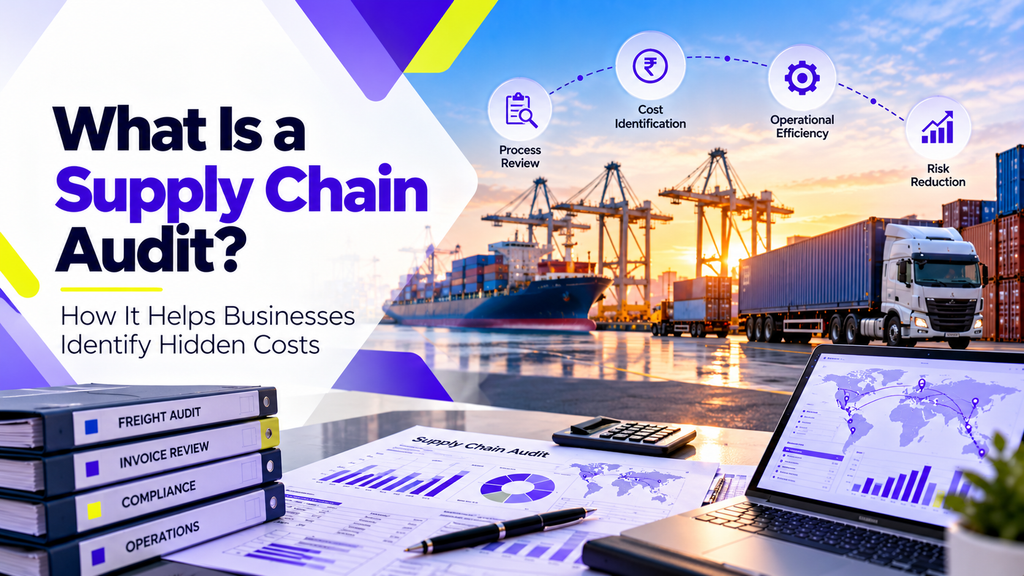
A supply chain audit is a systematic review of the processes, transactions, contracts, controls and operational activities involved in moving goods and managing supply chain resources.
Its purpose is to evaluate whether supply chain activities are operating efficiently, whether contractual and procedural requirements are being followed, and whether business expenditure is accurate, justified and properly controlled.
Unlike a review that focuses on a single invoice or department, a supply chain audit can examine the relationships between procurement, transportation, warehousing, inventory, suppliers, service providers and financial records.
Depending on the scope of the engagement, a supply chain audit may include:
- Freight and transportation cost verification
- Logistics operations and process reviews
- Contract and rate compliance checks
- Customs and trade compliance reviews
- Inventory and warehouse control assessments
- Supplier and service-provider performance evaluation
- Billing accuracy and transaction validation
- Identification of operational inefficiencies
- Review of internal controls and supporting documentation
- Recommendations for process improvement
The exact scope depends on the organisation’s operations, business objectives, available records and identified risks.
For example, a manufacturer may require a review of transportation expenditure and warehouse processes, while an importer may need closer examination of customs documentation, freight charges and contractual terms.
The objective is to build a clearer picture of how supply chain activities perform and identify practical opportunities to improve cost control, compliance and operational efficiency.
Why Is a Supply Chain Audit Important for Businesses?
Supply chain audit expenditure is spread across several functions, departments and external service providers. This makes it difficult to understand the complete cost of operating a supply chain by examining individual transactions alone.
A freight invoice may be accurate in isolation but inconsistent with the agreed contract. A warehouse may report sufficient inventory while its physical stock records reveal discrepancies. A supplier may meet delivery requirements but create additional costs through incomplete documentation or inconsistent processes.
Without structured monitoring, these issues can remain unnoticed.
A supply chain audit helps businesses examine these activities systematically and determine whether the underlying processes are working effectively.
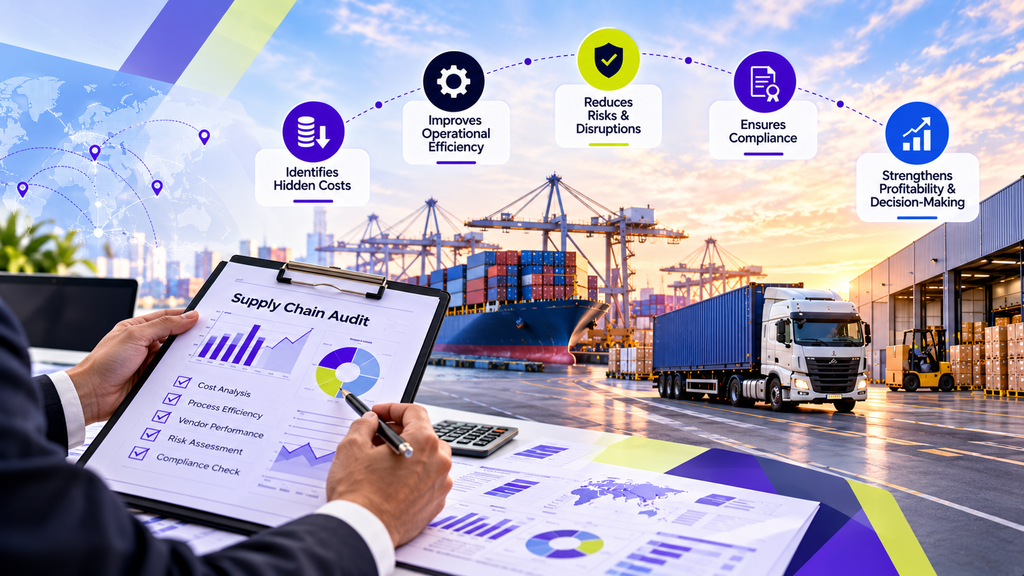
1. Identify Hidden Cost Leakages
Hidden cost leakages occur when business expenditure increases because of errors, inefficiencies, duplicate charges, weak controls or contractual discrepancies.
Examples include:
- Freight charges that do not match agreed rates
- Duplicate billing for the same service
- Unexplained accessorial or additional charges
- Avoidable detention and demurrage expenses
- Repeated emergency shipments
- Excessive warehouse handling costs
- Inventory discrepancies and avoidable write-offs
- Inefficient processes that increase labour or operating expenses
These issues may not always be visible in high-level financial reports. A detailed review of invoices, contracts, operational records and supporting documents can help determine where discrepancies exist and whether corrective action is required.
2. Improve Cost Visibility
Businesses need to understand not only how much they spend but also what drives their expenditure.
A supply chain audit can help organise costs by supplier, transporter, route, warehouse, service category or business location, depending on the data available.
This makes it easier to compare similar activities, identify unusual variations and understand the factors influencing overall supply chain expenditure.
Better cost visibility supports more informed budgeting, procurement decisions, contract negotiations and operational planning.
3. Strengthen Compliance and Internal Controls
Supply chain audit activities involve contractual commitments, operating procedures, financial approvals and regulatory documentation.
When controls are weak or inconsistently applied, businesses may face incorrect payments, documentation gaps, contractual non-compliance or avoidable operational risks.
An audit can evaluate whether transactions are supported by appropriate documentation, approvals and contractual terms. It can also highlight control gaps that require clearer procedures or stronger monitoring.
4. Improve Operational Efficiency
Not every supply chain problem is financial in nature. Delays, duplicated activities, unnecessary handling and poor coordination can also affect productivity and service quality.
A supply chain audit examines the processes behind these outcomes to identify where responsibilities, workflows or operating procedures may need improvement.
The goal is not simply to reduce expenditure. It is to improve the way resources are used while maintaining appropriate service levels and operational reliability.
5. Support Better Business Decisions
Reliable operational and financial information helps management make decisions based on evidence rather than assumptions.
Audit findings can support decisions about supplier relationships, transporter contracts, warehouse processes, inventory controls, cost allocation and operational priorities.
When findings are clearly documented and prioritised, management can focus resources on the issues with the greatest financial, operational or compliance significance.
What Does a Supply Chain Audit Cover?
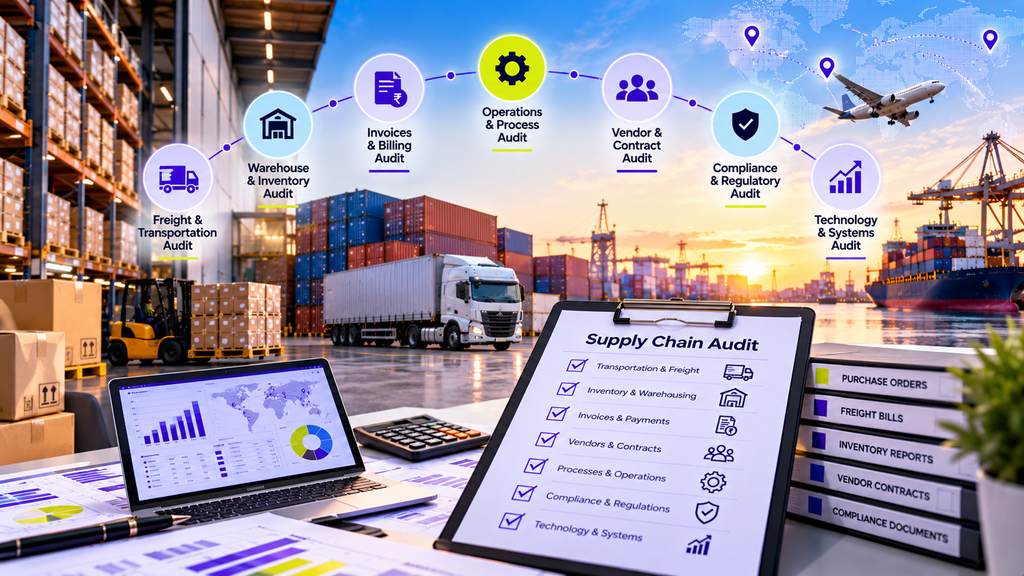
A supply chain audit can cover several interconnected business functions. The areas reviewed depend on the organisation’s supply chain structure, industry, expenditure patterns and business priorities.
For many organisations, the following five areas provide a useful starting point.
1. Freight and Transportation Audit
Transportation is often a significant supply chain expense, particularly for businesses managing regular shipments, multiple routes and several transporters.
However, reviewing freight costs involves more than comparing quoted rates. Businesses also need to verify whether the charges applied to actual shipments match the agreed commercial terms.
A freight and transportation audit may examine:
- Contracted freight rates versus actual billed rates
- Freight calculations based on weight, volume, distance or agreed pricing structures
- Additional charges and their supporting documentation
- Duplicate or repeated billing
- Route-level transportation expenditure
- Detention, demurrage and waiting-time charges
- Shipment records and proof of delivery
- Compliance with transporter agreements
For example, if a transporter applies a different rate from the contracted rate, the discrepancy should be investigated before it is accepted as a valid business expense.
A structured review helps businesses identify billing inconsistencies and understand the factors contributing to transportation expenditure.
2. Logistics Operations Audit
Logistics operations involve the processes used to receive, handle, store, move and deliver goods.
Inefficiencies in these activities can increase operating costs even when freight rates and supplier prices remain unchanged.
A logistics operations audit may assess:
- Loading and unloading processes
- Warehouse receiving and dispatch procedures
- Material handling activities
- Vehicle turnaround time
- Shipment scheduling and coordination
- Documentation and process controls
- Delays and recurring operational bottlenecks
- Performance against established service requirements
For instance, repeated delays during loading may increase vehicle waiting time and contribute to additional charges. Reviewing the process can help identify whether the issue relates to staffing, documentation, warehouse readiness or coordination between departments.
The findings can help businesses identify opportunities to improve workflow efficiency and reduce avoidable operational expenditure.
3. Customs and Trade Compliance Audit
Businesses involved in importing and exporting goods must manage documentation, declarations, commercial terms and applicable regulatory requirements.
Errors or inconsistencies in these activities can lead to delays, additional costs, rework or compliance risks.
A customs and trade compliance audit may review:
- Import and export documentation
- Consistency between relevant commercial and shipping records
- Applicable customs procedures and requirements
- Supporting records for declared transactions
- Coordination with customs brokers and service providers
- Compliance with applicable contractual and procedural requirements
- Documentation gaps and control weaknesses
The review should be aligned with the relevant jurisdictions, regulations and scope of the engagement.
By examining documentation and processes, businesses can identify areas that require correction, stronger controls or more consistent procedures.
4. Inventory and Warehousing Audit
Inventory represents a significant investment for many businesses. Poor inventory visibility, inaccurate records and inefficient warehouse processes can affect working capital, fulfilment performance and operating costs.
An inventory and warehousing audit may examine:
- Recorded inventory versus physical stock
- Inventory movement documentation
- Receiving, storage and dispatch controls
- Stock discrepancies and adjustment records
- Damaged, obsolete or slow-moving inventory
- Storage utilisation and handling processes
- Stock reconciliation procedures
- Access controls and approval processes
For example, differences between recorded and physical stock may result from transaction errors, unrecorded movements, damaged goods or weaknesses in warehouse procedures.
A structured audit can help establish where discrepancies occur and whether the underlying controls need improvement.
5. End-to-End Supply Chain Audit
Individual reviews can identify problems within specific functions, but some cost leakages arise from the way different functions interact.
For example, a purchasing decision may affect warehouse storage requirements, which may influence inventory handling, dispatch schedules and transportation costs.
An end-to-end supply chain audit examines these relationships across the broader operating network.
Depending on the scope, it may include:
- Procurement and supplier processes
- Contract management and commercial controls
- Freight and transportation expenditure
- Warehouse and inventory operations
- Documentation and compliance
- Coordination between departments
- Operational performance indicators
- Financial and process-control weaknesses
This wider perspective helps businesses understand how decisions in one part of the supply chain can affect costs and performance elsewhere.
7 Common Hidden Costs a Supply Chain Audit Can Help Identify
Hidden costs do not always appear as obvious errors in financial records. Some result from incorrect transactions, while others develop gradually through inefficient processes, inconsistent controls or poor coordination.
A supply chain audit can help investigate the following areas.
1. Freight Billing Discrepancies
Freight invoices may contain rates, quantities, distances or additional charges that differ from the applicable contract or shipment records.
Possible issues include incorrect rate application, unsupported charges, duplicate invoices or calculation errors.
What businesses should review: Compare freight invoices with the relevant contract, rate card, shipment documentation and proof of delivery. Investigate exceptions before determining whether a charge is valid.
2. Duplicate Payments and Billing
Duplicate billing can occur when the same service is invoiced more than once or when similar transactions are processed without adequate checks.
This can happen across different invoice numbers, departments, locations or payment cycles.
What businesses should review: Examine invoice references, supplier details, shipment identifiers, service dates and payment records. Use duplicate-detection controls where suitable, followed by verification of flagged transactions.
3. Contract and Rate Mismatches
A negotiated contract does not automatically guarantee that every subsequent transaction follows its terms.
Rate changes, outdated pricing information, incorrect billing rules or inconsistent application of agreed conditions can create discrepancies.
What businesses should review: Check whether applicable rates, surcharges, service conditions and billing methods align with the approved contract and its effective dates.
4. Detention, Demurrage and Waiting-Time Charges
Delays at warehouses, loading points, ports or delivery locations may result in additional charges, depending on the applicable agreement and circumstances.
Recurring delays can also indicate process problems that are not resolved by paying the additional fees.
What businesses should review: Compare charge records with arrival and departure timestamps, applicable free-time provisions, delivery schedules and supporting documentation. Identify recurring causes of delay and the departments or locations involved.
5. Inventory Discrepancies and Avoidable Losses
Differences between physical stock and system records can affect replenishment decisions, order fulfilment and financial reporting.
Inventory issues may result from receiving errors, unrecorded movements, damage, incorrect adjustments or inadequate reconciliation.
What businesses should review: Compare physical counts with inventory records, examine stock adjustments and movement history, and investigate recurring differences by product, location or process.
6. Inefficient Warehouse and Handling Processes
Unnecessary movement, repeated handling, poor storage arrangements and delays during receiving or dispatch can increase operating costs.
These expenses may be spread across labour, equipment, storage and transportation rather than recorded under one obvious cost category.
What businesses should review: Examine warehouse workflows, handling records, storage utilisation, dispatch performance and recurring operational bottlenecks.
7. Weak Coordination Between Supply Chain Functions
Procurement, warehousing, finance and transportation teams often depend on one another to complete a shipment.
When these functions work with inconsistent information or poorly coordinated schedules, businesses may experience urgent shipments, missed dispatch windows, additional handling and avoidable delays.
What businesses should review: Trace selected transactions across departments, identify repeated handover problems and evaluate whether responsibilities, approvals and communication procedures are clearly defined.
These examples illustrate why a supply chain audit should consider both financial transactions and the operational processes behind them. A discrepancy is a signal to investigate, not automatic proof of an overcharge or recoverable saving.
How Does a Supply Chain Audit Work?
A structured supply chain audit generally follows a series of steps. The precise methodology depends on the audit objective, the complexity of the operation and the records available.
Step 1: Define the Audit Scope
Establish the business objectives, locations, processes, suppliers, expenditure categories and review period. A clear scope keeps the audit focused on relevant risks and questions.
Step 2: Collect Relevant Data and Documents
Gather appropriate contracts, invoices, shipment records, inventory reports, operational data, approvals and supporting documents. The quality and completeness of these records influence the reliability of the review.
Step 3: Examine Transactions and Processes
Compare actual transactions against contracts, approved procedures and relevant records. Analyse exceptions, unusual variations and recurring operational issues.
Step 4: Identify and Validate Findings
Investigate discrepancies, confirm the available evidence, understand root causes and distinguish confirmed issues from items requiring further information.
Step 5: Recommend Corrective Actions
Prioritise findings by their financial, operational and compliance significance. Recommend practical actions, assign responsibilities where appropriate and establish ways to monitor implementation.
A useful audit should go beyond listing discrepancies. It should help management understand what happened, why it happened, what evidence supports the finding and what action could reduce the likelihood of recurrence.
How to Measure the Effectiveness of a Supply Chain Audit
Identifying an issue is only one part of an audit. Businesses also need to determine whether corrective actions improve cost control, operational performance and compliance over time.
The most appropriate measurements depend on the audit scope and the organisation’s objectives.
1. Freight Cost Accuracy
Measures whether freight charges align with applicable contracts, approved rates and supporting shipment records.
2. Invoice Exception Rate
Tracks the proportion of reviewed invoices containing discrepancies that require investigation.
A consistently high exception rate may indicate problems with billing processes, master data, contractual interpretation or transaction controls.
3. Inventory Accuracy
Measures the alignment between physical inventory and recorded stock quantities.
The results can help identify weaknesses in stock recording, reconciliation and warehouse controls.
4. On-Time Delivery Performance
Tracks whether shipments arrive within agreed delivery windows.
This indicator helps businesses assess service reliability alongside cost-control initiatives.
5. Additional Logistics Cost
Monitors relevant additional expenses, such as detention, demurrage, waiting-time charges or unplanned transportation expenditure.
Businesses should investigate recurring increases rather than assuming every additional charge is avoidable.
6. Corrective Action Closure
Tracks whether agreed corrective actions have been implemented and whether the underlying issues have been addressed.
This helps management distinguish between an audit that identifies problems and one that contributes to sustained process improvement.
7. Verified Cost Savings and Cost Avoidance
Measures the financial impact of implemented improvements where the results can be supported by reliable evidence.
Cost savings should be calculated using a clearly defined baseline and consistent assumptions. Cost avoidance should be reported separately where appropriate, and potential savings should not be presented as confirmed financial recovery.
Monitoring these indicators over time helps businesses evaluate whether audit recommendations are producing meaningful improvements.
Supply Chain Audit vs. Regular Operational Monitoring
Regular monitoring and supply chain audits serve related but different purposes.
| Area | Regular monitoring | Supply chain audit |
|---|---|---|
| Primary purpose | Track ongoing performance | Examine processes, transactions and controls |
| Typical approach | Review reports and operational indicators | Test records, compare evidence and investigate exceptions |
| Main focus | Performance trends and immediate issues | Underlying causes, discrepancies and control weaknesses |
| Frequency | Often continuous or periodic | Based on scope, risk and business requirements |
| Typical output | Dashboards, reports and alerts | Documented findings and recommendations |
Regular monitoring helps a business understand what is happening. A supply chain audit can investigate why particular results occur and whether the processes and controls behind them are appropriate.
Both approaches can complement each other. Monitoring may identify an unusual increase in freight expenditure, for example, while an audit investigates whether the increase resulted from rate changes, shipment patterns, billing discrepancies or operational inefficiencies.
Common Mistakes Businesses Should Avoid During a Supply Chain Audit
An supply chain audit is most useful when its findings are supported by evidence and connected to practical business decisions. Several mistakes can limit its effectiveness.
1. Focusing Only on Freight Costs
Transportation expenditure is important, but other areas such as inventory, warehousing, contracts and compliance may also contain material risks.
The audit scope should reflect the organisation’s wider supply chain exposure rather than assuming every problem originates in freight.
2. Reviewing Invoices Without Checking Supporting Records
An invoice alone may not establish whether a charge is correct.
Businesses should compare relevant invoices with contracts, shipment records, service confirmations, approvals and other appropriate evidence.
3. Treating Every Discrepancy as a Confirmed Loss
Differences in records may have valid explanations, including approved contract variations, timing differences or incomplete documentation.
Each exception should be investigated before it is classified as an error, an overcharge or a recoverable amount.
4. Ignoring Root Causes
Correcting one invoice may resolve an individual discrepancy without preventing similar issues from happening again.
Businesses should examine whether recurring findings are linked to system configuration, outdated rate information, unclear responsibilities or inadequate approval procedures.
5. Failing to Prioritise Findings
Not every issue carries the same level of risk or financial significance.
Businesses should prioritise findings based on factors such as potential financial impact, frequency, compliance exposure, operational disruption and the strength of supporting evidence.
6. Not Following Up on Recommendations
An audit report has limited value if its recommendations are never implemented or reviewed.
Management should define suitable responsibilities, target dates and follow-up measures to determine whether corrective actions have been completed effectively.
When Should a Business Consider a Supply Chain Audit?
A business does not necessarily need to wait for a major financial problem before reviewing its supply chain.
An audit may be particularly useful when:
- Transportation or logistics expenditure is increasing without a clear explanation.
- Freight invoices frequently contain discrepancies.
- The business has expanded into new locations or markets.
- Several suppliers, transporters or logistics service providers are involved.
- Contractual rates and billing practices are difficult to reconcile.
- Inventory records regularly differ from physical stock.
- Warehouse delays or handling problems recur.
- Management has limited visibility into supply chain costs.
- Internal controls or operating procedures require review.
- The organisation is preparing for a major contract renewal or operational change.
The appropriate timing and scope depend on the organisation’s risk profile, operational complexity and business priorities.
For companies managing multiple locations, large transaction volumes or several service providers, a structured review can help management establish a clearer understanding of how supply chain expenditure and operational controls are performing.
How Audex Helps Businesses Identify Hidden Supply Chain Costs
Understanding supply chain audit expenditure requires more than reviewing financial totals. Businesses need to examine the underlying transactions, operating processes, contractual arrangements and controls that influence those costs.
Audex focuses on supply chain and logistics audit expertise, helping businesses examine operational activities, identify potential inefficiencies and understand where stronger cost control may be required.
Depending on the scope of the engagement, Audex’s audit services cover five key areas:
Freight Audit
Freight audit reviews can help businesses examine transportation charges, contractual rates, supporting documentation and billing accuracy to identify discrepancies that require investigation.
Logistics Operations Audit
A logistics operations audit examines relevant processes, operating practices and performance controls to identify potential inefficiencies and opportunities for improvement.
Customs and Compliance Audit
Customs and compliance reviews focus on relevant documentation, procedures and controls to identify gaps requiring attention, subject to the applicable regulations and agreed audit scope.
Inventory Audit
Inventory audits examine stock records, warehouse controls, inventory movements and reconciliation procedures to identify discrepancies and areas where stronger controls may be needed.
End-to-End Supply Chain Audit
An end-to-end review considers how multiple supply chain audit functions interact, helping businesses examine cost drivers, operational processes and control weaknesses across the wider network.
Through a structured supply chain audit approach, businesses can develop a clearer understanding of their supply chain operations and make more informed decisions about corrective action.
The objective is not to assume that every business has the same problems. It is to examine the available evidence, identify relevant findings and recommend practical improvements suited to the organisation’s requirements.
To learn more about Audex’s approach and expertise, visit the About Audex page.
The Business Value of an Independent Supply Chain Audit
An independent audit can provide an additional perspective on supply chain processes, transactions and controls.
When the review is appropriately scoped and supported by reliable evidence, it can help management examine whether established practices are working as intended and whether potential issues require further investigation.
The business value may include:
- Better visibility into supply chain expenditure
- Identification of potential billing discrepancies
- Improved understanding of recurring operational issues
- Stronger documentation and transaction controls
- Better-informed contract and supplier decisions
- More consistent processes across locations
- Clearer prioritisation of corrective actions
- Improved monitoring of operational and financial performance
However, the value of an audit depends on the quality of the available information, the scope of the review, management’s response to findings and the effectiveness of corrective actions.
An audit does not automatically guarantee savings or eliminate every risk. Its purpose is to provide an evidence-based understanding of the issues examined and support informed decisions about improvement.
Conclusion — Audex Insights
A supply chain audit provides businesses with a structured way to examine expenditure, operational processes, contractual compliance and internal controls.
By reviewing freight transactions, logistics operations, customs documentation, inventory records and connected supply chain activities, organisations can identify discrepancies, investigate inefficiencies and understand where corrective action may be required.
The objective is not simply to reduce costs. It is to understand the reasons behind those costs, strengthen control over business processes and improve the reliability of supply chain operations.
For businesses managing multiple suppliers, transporters, warehouses and distribution locations, a wider audit perspective can reveal issues that may remain hidden when each transaction or department is examined separately.
A well-planned audit also creates a foundation for continuous improvement by helping management prioritise findings, implement corrective actions and monitor the results.
Your Supply Chain Costs May Tell Only Half the Story.
The real opportunity lies in understanding what drives those costs, where controls may be falling short and which improvements can deliver measurable business value.
Audex helps businesses examine their supply chain and logistics operations through structured audit services focused on cost visibility, operational efficiency and stronger controls.
Leave a Reply